
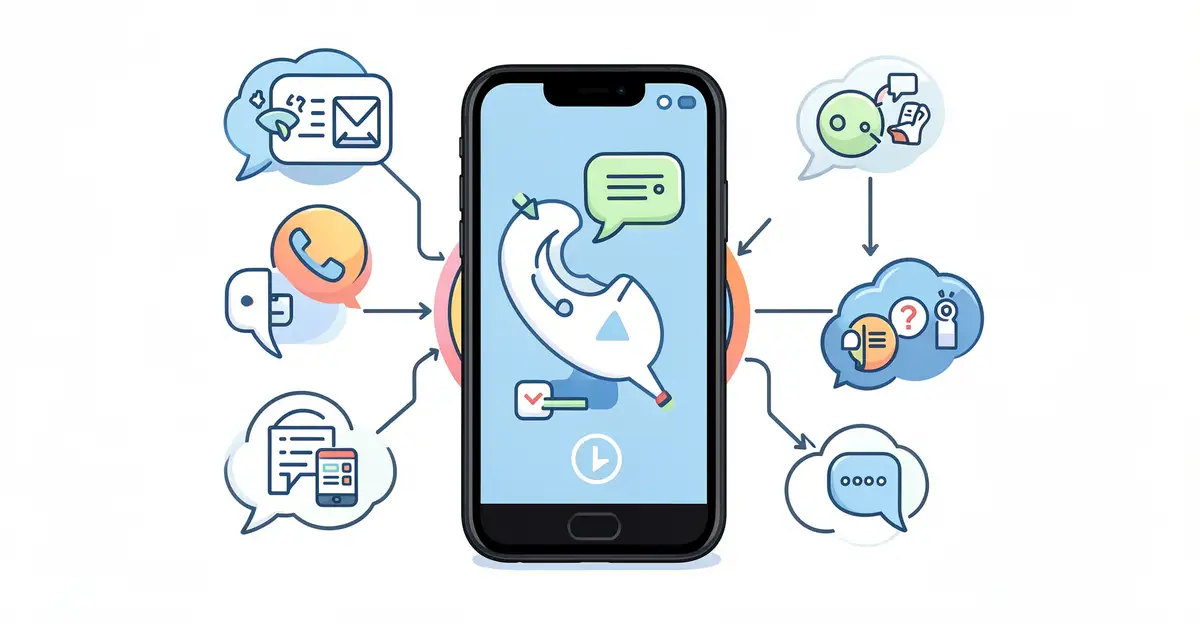
Smartphones have reshaped the way we connect, turning communication into something instant, visual, and always within reach. From a quick text to a video call across continents, the device in your pocket now handles what once required letters, landlines, and face-to-face meetings. Understanding how smartphones have changed modern communication helps you use these tools more deliberately, both at work and in your personal life.
In this article, we break down the biggest shifts—speed, accessibility, and the rise of messaging apps—and share practical tips to communicate clearly without letting your phone take over. Whether you want stronger relationships or better professional habits, these insights will help you adapt.
Introduction
This article explores How Smartphones Have Changed Modern Communication with clear, practical guidance. In less than two decades, the smartphone has gone from a novelty to the primary tool through which billions of people talk, work, learn, and maintain relationships. That shift is not just technological; it is social, emotional, and economic. Understanding it helps you communicate deliberately rather than reactively.
The pace of change has been remarkable. The first iPhone arrived in 2007. By the early 2020s, more than 85 percent of American adults owned a smartphone, and global mobile connections outnumbered the world’s population. For most people, the phone in their pocket is now the first and last thing they check each day. It carries voices, text, video, payments, and identity itself.
Yet convenience has a cost. Constant connectivity can blur boundaries, shorten attention spans, and replace rich conversation with shallow pings. The goal of this guide is not to praise or condemn smartphones, but to help you use them well. You will find key concepts, a step-by-step framework, practical habits, and answers to common questions. By the end, you should be able to make informed decisions about how these devices shape your communication.
Key Concepts
Before diving into tactics, it helps to understand the core ideas that explain how smartphones changed communication. These concepts form the foundation for everything that follows.
Asynchronous vs. synchronous communication
Older communication tools were mostly synchronous: a phone call or a face-to-face meeting happened in real time. Smartphones popularized asynchronous messaging. You send a text, a voice note, or an email, and the other person responds when convenient. This flexibility is powerful, but it creates new expectations. Many people now feel pressure to reply instantly, even when they are off the clock.

The collapse of context
A single device now carries work emails, family group chats, dating apps, and news alerts. These contexts used to be physically separate. On a smartphone they collide. A serious work message can arrive in the middle of a birthday dinner, and a joke from a friend can appear during a board meeting. Managing that collision is a core communication skill today.
Presence and the attention economy
Smartphones make us reachable everywhere, but reachability is not the same as presence. Studies of “phubbing” — snubbing someone in favor of your phone — show that even a phone resting on a table can reduce the quality of a conversation. Companies design apps to capture attention, so staying present requires intentional effort.
Digital body language
Text lacks tone, facial expression, and timing. Emojis, punctuation, and response speed become stand-ins for emotion. A period at the end of a sentence can read as cold; a delayed reply can read as rejection. Learning this new “digital body language” prevents countless misunderstandings.
Access and inequality
Smartphones have widened access to communication for people with disabilities, rural communities, and those in developing regions. At the same time, the digital divide persists. Not everyone has reliable data, a modern device, or the literacy to navigate these tools. Good communication includes awareness of who might be left out.
- Reachability: you can be contacted almost anywhere, at almost any time.
- Multimodality: text, voice, video, images, and payments in one channel.
- Persistence: messages are stored, searchable, and forwardable.
- Personalization: algorithms shape what you see and when you see it.
Deep Dive
Understanding the fundamentals of How Smartphones Have Changed Modern Communication helps you make informed decisions. So let’s look more closely at where the changes are felt most: relationships, work, and public life.
Relationships: more contact, different quality
Couples and families now coordinate in real time through shared calendars and group chats. Long-distance relationships that once relied on expensive calls or letters now include daily video and voice notes. This keeps bonds alive across distance. But quantity of contact can mask a decline in depth. A stream of memes and reactions is not the same as a meaningful conversation. The healthiest relationships tend to combine frequent light contact with regular, undistracted, deeper talks.
Work: always-on culture
Email on a phone means the office follows you home. Remote and hybrid work would be nearly impossible without smartphones, yet the same devices make it hard to disconnect. Research on “telepressure” — the urge to respond to work messages immediately — links constant availability to burnout and poorer sleep. Organizations and individuals both need norms: quiet hours, clear escalation paths, and respect for response-time expectations.
Language and literacy
Texting created its own shorthand — acronyms, GIFs, and emoji. Far from destroying language, this has added new registers. People code-switch between formal email, casual chat, and emoji-rich banter. The risk is not that writing is dying, but that many people now write only in short bursts, so longer-form clarity takes deliberate practice.
Information and misinformation
Smartphones turned every user into a broadcaster. That democratizes voice but also speeds up rumors. A message forwarded through a family group can reach thousands before anyone checks the source. Media literacy — pausing before sharing, checking the original context, and naming uncertainty — is now part of everyday communication.
Privacy and permanence
Messages feel ephemeral, but screenshots last forever. Location data, metadata, and cloud backups mean that casual communication leaves a long trail. Understanding basic privacy settings, and treating any message as potentially public, protects both relationships and reputations.
These shifts are not inherently good or bad. They are conditions you can work with. Reliable information and consistent habits lead to better long-term outcomes, whether you are managing a team, staying close to family, or simply trying to be a kinder texter.
Best Practices
You do not need to abandon your phone to communicate well. You need a set of habits that match the medium to the message. Consider the following practices.
- Match the channel to the stakes. Use text for logistics, calls or video for conflict or complex decisions, and in-person meetings for anything emotionally significant.
- Set response-time expectations. Tell people when you are typically available, and give colleagues a way to flag true emergencies.
- Batch your messages. Check and reply in blocks rather than reacting to every buzz. This reduces errors and preserves focus.
- Protect presence. Keep phones off the table during meals and meetings. Even face-down, a phone taxes attention.
- Write for clarity. When tone matters, add a sentence of context, use a greeting, and avoid sarcasm unless you know the reader well.
- Respect quiet hours. Disable work notifications after a set time and encourage others to do the same.
- Verify before forwarding. If a claim provokes strong emotion, that is the moment to check the source.
- Audit your notifications. Turn off everything that is not from a human who needs you.
These habits work together. Clarity about channels reduces anxiety, boundaries restore focus, and verification protects trust. Start with two or three that feel most urgent, then build from there.
Step-by-Step Guide
Use the following framework to take control of how you communicate on your smartphone. Each step builds on the last, so work through them in order.
Step 1: Understand the fundamentals
Begin by mapping how you currently use your phone. List your main communication apps, who you talk to on each, and roughly how much time you spend. Note which conversations are synchronous (calls, live chats) and which are asynchronous (texts, email). The point is not to judge yourself but to see the full picture. Understanding the fundamentals of How Smartphones Have Changed Modern Communication helps you make informed decisions, because you can only change patterns you can see.
Step 2: Assess your starting point
Look at your screen-time reports and notification history. Ask honest questions: Which messages do I dread? Which relationships feel neglected? Where do I respond too quickly or too slowly? Identify one or two pain points, such as work email after dinner or arguments caused by misread texts. A clear baseline makes progress measurable and prevents vague resolutions.
Step 3: Set clear goals
Turn your pain points into specific, achievable goals. Instead of “use my phone less,” try “no work email after 7 p.m. on weekdays” or “call my parents every Sunday.” Good goals are observable and tied to a value you care about, such as better sleep, stronger friendships, or deeper focus. Write them down and share them with someone who will hold you accountable.
Step 4: Gather necessary resources
Set up the tools that make your goals easy. Use focus modes or Do Not Disturb schedules, adjust notification settings per app, and create separate profiles for work and personal life if your device supports it. Keep a simple note of important contacts and preferred channels. If a relationship matters, make sure you know the best way to reach that person. Resources should reduce friction, not add another chore.
Step 5: Apply the core methods
Now put the practices into action. Match channels to stakes, batch your replies, and keep phones away during focused conversations. Use voice notes when text feels too flat, and switch to a call when a thread goes in circles for more than a few exchanges. When you feel the urge to check your phone mid-conversation, pause and return your attention to the person in front of you. Consistency matters more than perfection; small, repeated choices reshape habits.
Step 6: Monitor your progress
Review your goals weekly or monthly. Check screen-time data, but also ask people around you whether your communication has improved. Adjust what is not working. If a boundary is unrealistic, revise it rather than abandoning the effort. Reliable information and consistent habits lead to better long-term outcomes, so treat this step as ongoing maintenance rather than a one-time fix. Over time, these reviews become quick and mostly automatic.
FAQ
What should I know about How Smartphones Have Changed Modern Communication?
The most important thing to know is that the change is about expectations as much as technology. Smartphones made communication faster, cheaper, and multimodal, but they also made it more constant and more ambiguous. You can reach almost anyone instantly, and almost anyone.
You now have a solid foundation for How Smartphones Have Changed Modern Communication. Apply the best practices above and revisit this guide as your needs evolve.