

Automation is no longer a luxury reserved for tech giants—it’s becoming the backbone of everyday business operations. From streamlining repetitive tasks to unlocking smarter decision-making, how automation is transforming modern businesses touches nearly every industry, helping teams work faster, cut costs, and refocus on what truly drives growth.
But what does that shift actually look like in practice? In this article, we’ll break down the key ways automation is reshaping workflows, customer experiences, and competitiveness—plus actionable steps you can take to stay ahead.
Introduction
Automation is no longer a futuristic concept reserved for large manufacturers or tech giants. It has become a practical, accessible force reshaping how businesses of every size operate, compete, and grow. From scheduling social media posts to routing customer support tickets to generating financial reports, automation quietly removes repetitive work so people can focus on judgment, creativity, and relationships.
The shift is not just about saving time. It changes the economics of running a business. Tasks that once required a full-time employee or an expensive agency can now be handled by software that runs around the clock, makes fewer errors, and scales instantly. That means small teams can punch above their weight, and larger organizations can redirect talent toward higher-value work.
This article explores How Automation Is Transforming Modern Businesses with clear, practical guidance. You will learn the core concepts behind business automation, see how it plays out in real departments, and follow a step-by-step path to implement it without disruption. Whether you are a solo founder, an operations manager, or a team lead, the goal is the same: make automation work for you rather than overwhelm you.
Understanding the fundamentals of How Automation Is Transforming Modern Businesses helps you make informed decisions. Instead of chasing every shiny tool, you can evaluate what fits your workflow, your budget, and your growth stage. Reliable information and consistent habits lead to better long-term outcomes. That principle runs through every section below.
Key Concepts
Before diving into tools and tactics, it helps to understand the vocabulary. Automation can mean different things depending on context, and mixing them up leads to poor decisions.
- Rule-based automation: Software follows a fixed “if this, then that” logic. Example: when a form is submitted, send a confirmation email and create a task in your project board.
- Workflow automation: Multiple steps across different apps are chained together. Example: a new lead triggers a welcome sequence, a calendar invite, and a CRM update.
- Robotic process automation (RPA): Software bots mimic human clicks and keystrokes to handle legacy systems that lack APIs. Common in finance, insurance, and healthcare.
- Artificial intelligence (AI) automation: Systems that learn from data and make judgments, such as classifying support tickets by urgency or predicting which customers might churn.
- Integration platform as a service (iPaaS): Tools like Zapier, Make, or Workato that connect apps without custom code.
Three distinctions matter when planning. First, automation replaces repetitive actions, not entire jobs. Second, automation works best on stable, well-documented processes; automating a broken process just creates faster chaos. Third, automation requires maintenance. APIs change, business rules evolve, and someone must own the system.
Another key concept is the automation spectrum, from simple personal shortcuts to enterprise-grade orchestration. You do not need to start at the top. In fact, starting small reduces risk and builds confidence. A single automated invoice reminder can save hours each month and prove the concept before you expand.
Finally, consider the human side. Automation changes roles. Some tasks disappear, others emerge—like automation analyst, integration specialist, or AI trainer. Businesses that communicate openly and retrain staff see smoother adoption and higher morale.

Deep Dive
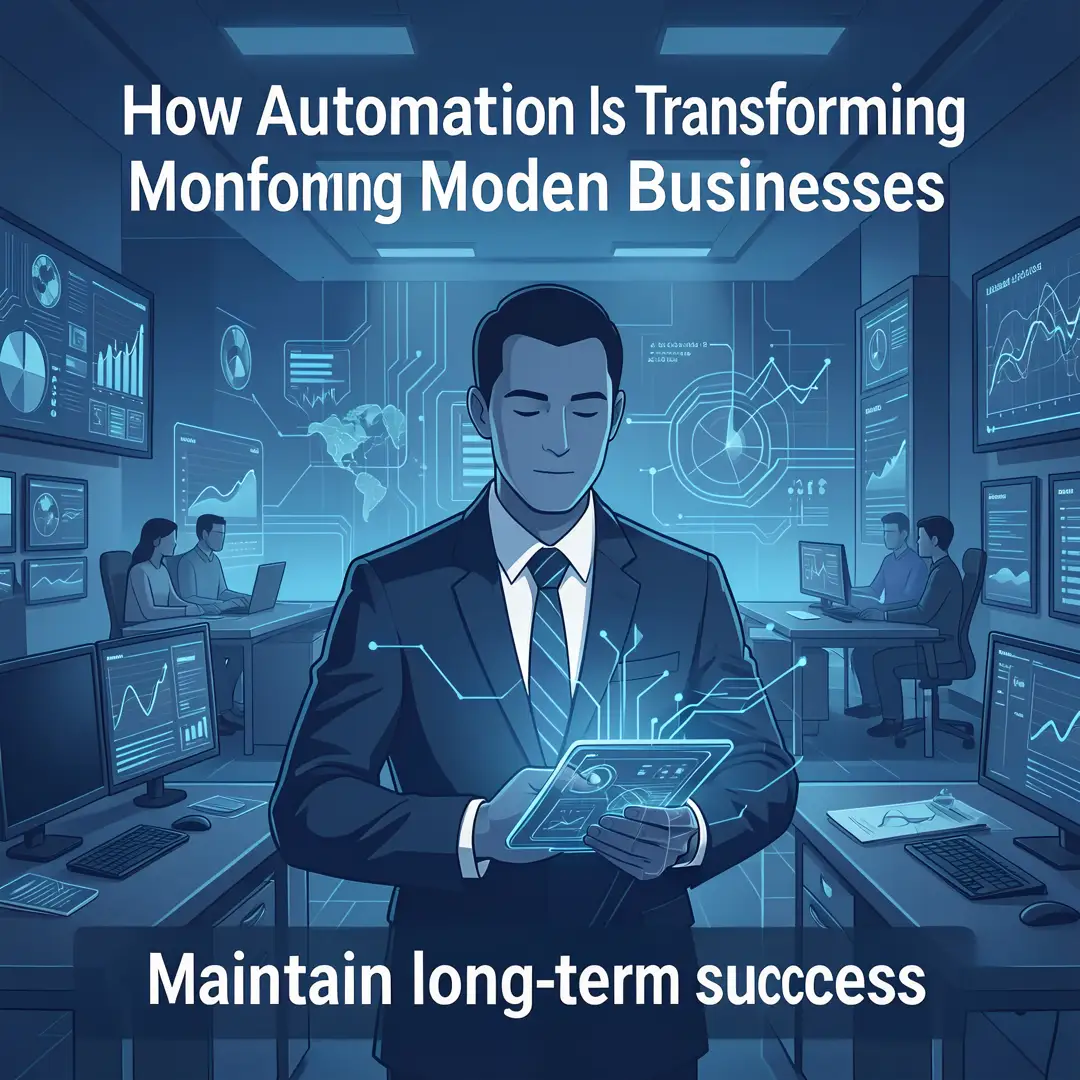
To see how automation transforms businesses, look at where it lands in day-to-day operations. The impact is rarely dramatic in a single moment; it accumulates across departments.
Marketing and sales
Automation handles lead capture, scoring, nurturing, and follow-up. A prospect who downloads a guide can receive a tailored email series, a calendar link, and a notification to a sales rep—all without manual effort. This shortens response times, which matters because leads contacted within five minutes are far more likely to convert. Sales teams use automation for pipeline updates, proposal generation, and renewal reminders, freeing reps to actually sell.
Customer support
Chatbots and AI assistants resolve common questions instantly, while routing complex issues to the right human. Ticket tagging, sentiment analysis, and knowledge-base suggestions reduce handle time. The result is faster resolution and more consistent answers, especially outside business hours.
Finance and administration
Invoicing, expense categorization, payroll, and reconciliation are prime candidates for automation. RPA bots can pull data from bank portals and enter it into accounting software, reducing errors and closing the books faster. For small businesses, automated reminders cut late payments and improve cash flow.
Operations and HR
Inventory reordering, shipping notifications, and quality checks can run automatically based on thresholds. HR uses automation for onboarding, benefits enrollment, and leave requests. Employees spend less time on forms and more time on people.
What ties these examples together is a shift from reactive to proactive work. Instead of waiting for a problem, automated systems monitor, alert, and act. That leads to fewer surprises and more predictable performance.
However, automation is not a magic wand. Common pitfalls include over-automating customer interactions until they feel robotic, ignoring data quality, and failing to document processes. The businesses that succeed treat automation as an ongoing capability, not a one-time project. They start with clear objectives, measure results, and iterate.
Another deep shift is in decision-making. Automated dashboards surface real-time metrics, so leaders can act on evidence rather than gut feel. When sales, support, and finance data flow into one view, you spot bottlenecks you did not know existed. That visibility alone often justifies the investment.
Best Practices
Getting automation right is less about the tool and more about the approach. These practices consistently separate successful implementations from costly failures.
- Start with a process, not a tool. Map the workflow on paper first. Identify steps, owners, and decision points. Only then look for software.
- Automate the stable and repetitive. Choose tasks that happen frequently, follow clear rules, and rarely change. Leave ambiguous, high-stakes decisions to humans.
- Involve the people doing the work. They know the edge cases. Their buy-in determines adoption.
- Document everything. Record triggers, actions, credentials, and fallback procedures. Future you will thank present you.
- Build in error handling. What happens when an API fails or data is missing? Set notifications so problems surface quickly.
- Measure before and after. Track time saved, error rates, response times, or cost per transaction. Numbers justify expansion.
- Review regularly. Schedule quarterly check-ins to retire obsolete automations and update rules.
Security deserves special attention. Automated systems often hold credentials and move sensitive data. Use role-based access, rotate keys, and avoid hard-coding passwords. For regulated industries, confirm that your automation complies with data protection rules.
Change management is equally important. Announce changes early, explain why, and offer training. Celebrate quick wins publicly. When people see automation removing drudgery rather than threatening jobs, resistance drops.
Step-by-Step Implementation
Follow these six steps to bring automation into your business methodically.

Step 1: Understand the fundamentals
Learn the difference between rule-based automation, workflow automation, RPA, and AI. Identify which type fits your needs. Read case studies from your industry, talk to peers, and take a short course if needed. This foundation prevents costly mistakes later.

Step 2: Assess your starting point
Audit your current processes. List every repetitive task, who does it, how long it takes, and how often errors occur. Rate each on frequency, time cost, and complexity. This inventory becomes your priority list.

Step 3: Set clear goals
Define what success looks like. Instead of “automate marketing,” aim for “reduce lead response time from four hours to five minutes” or “cut invoice processing time by 60%.” Specific goals guide tool selection and make results measurable.

Step 4: Gather necessary resources
Identify budget, software, and people. You may need an integration platform, API access, or a developer for custom work. Assign an owner who is accountable for each automation. Allocate time for training and documentation.
Step 5: Apply the core methods
Start with one high-impact, low-risk process. Build the automation, test it with real data, and run it alongside the manual process briefly. Fix issues before fully switching over. Then move to the next process on your list.

Step 6: Monitor your progress
Track the metrics you set in Step 3. Review dashboards weekly at first, then monthly. Gather feedback from users. Adjust rules, add error alerts, and document lessons. Use wins to secure support for broader rollout.
FAQ
What should I know about How Automation Is Transforming Modern Businesses?
Automation is changing how work gets done by handling repetitive, rule-based tasks so people can focus on judgment and relationships. The key points to understand are: it works best on stable processes, it requires ongoing maintenance, and it changes job roles. You should also know that automation is accessible to small businesses, not just enterprises, thanks to low-code and no-code tools. Starting with a clear goal and measuring results is more important than choosing the most advanced software. Finally, data quality and security are not optional—poor inputs produce poor outputs, and sensitive information must be protected.
Who is this guide for?
This guide is for business owners, operations managers, team leads, and anyone responsible for improving efficiency. It suits readers with little technical background who want a practical roadmap, as well as those who already use basic tools and want to scale. If you are curious about where to start, how to avoid common pitfalls, or how to measure success, the steps and best practices above apply to you.
Conclusion
Automation is reshaping modern businesses by turning repetitive work into reliable, scalable systems. It lowers costs, reduces errors, speeds up response times, and gives teams room to do their best work. The transformation is not about replacing people; it is about amplifying what people can achieve when they are not buried in busywork.
The path forward is practical. Understand the fundamentals, assess where you are, set measurable goals, gather the right resources, apply proven methods one process at a time, and monitor results. That cycle builds momentum. Each successful automation makes the next one easier and delivers compounding returns.
Reliable information and consistent habits lead to better long-term outcomes. You do not need to automate everything at once. Pick one process this week, apply the six steps, and let the results speak for themselves. That is how automation stops being a buzzword and becomes a genuine advantage for your business.
You now have a solid foundation for How Automation Is Transforming Modern Businesses. Apply the best practices above and revisit this guide as your needs evolve.