

Machine learning is no longer a futuristic concept—it is quietly powering choices you make every day. From the moment your phone unlocks with your face to the moment a streaming service suggests your next binge, machine learning is working behind the scenes to make technology faster and more personal.
Understanding how machine learning is used in everyday life helps you spot it, evaluate it, and use it to your advantage. This article breaks down real-world examples, explains the benefits in plain language, and shows you practical ways to make smarter decisions with the tools you already use.
Introduction
Machine learning has moved from research labs into the fabric of daily routines. It powers the recommendations you see on streaming platforms, the spam filter guarding your inbox, the voice assistant answering your questions, and the fraud alert that appears when your bank spots an unusual purchase. This article explores how machine learning is used in everyday life with clear, practical guidance, so you can recognize it, understand it, and use it to your advantage.
The term can sound technical, but the underlying idea is straightforward: instead of programming every rule by hand, developers feed data to algorithms that learn patterns and make predictions or decisions. That capability now sits behind countless products and services you already rely on. Understanding the fundamentals of how machine learning is used in everyday life helps you make informed decisions about the tools you adopt, the data you share, and the results you trust.
Reliable information and consistent habits lead to better long-term outcomes. Whether you are a student, a professional, a small business owner, or simply a curious consumer, the goal here is to replace vague awareness with working knowledge. You will learn the key concepts, see a deeper dive into real-world applications, and follow a step-by-step path to apply what you learn.
Key Concepts
Before diving into examples, it helps to anchor a few ideas. Machine learning is a branch of artificial intelligence where systems improve at a task by processing data rather than following only explicit instructions. The “learning” is really statistical pattern recognition, and it comes in a handful of common forms.
Supervised, Unsupervised, and Reinforcement Learning
- Supervised learning: The model trains on labeled examples. If you want to predict whether an email is spam, you show it thousands of emails already marked “spam” or “not spam.” Most everyday applications, from credit scoring to medical image analysis, lean on this approach.
- Unsupervised learning: The model finds structure in unlabeled data. Retailers use it to group customers with similar buying habits, and streaming services use it to discover clusters of viewers who enjoy similar content.
- Reinforcement learning: An agent learns by trial and error, receiving rewards for good actions. It is behind game-playing systems and increasingly behind robotics and personalized recommendation strategies.
Other essentials include features (the input variables), training data (the examples used to learn), and inference (the model making a prediction on new data). Overfitting happens when a model memorizes training examples instead of learning general patterns, similar to a student who memorizes answers without understanding the subject.

Why Everyday Users Should Care
You do not need to build models to benefit from understanding them. Knowing that a recommendation engine optimizes for engagement, for instance, can help you recognize when you are being nudged toward more screen time. Knowing that a fraud detector flags anomalies can help you respond calmly when a legitimate purchase is temporarily blocked. This knowledge turns you from a passive user into an informed one.
Machine learning also shapes decisions about you: loan approvals, insurance pricing, job candidate screening, and content moderation. Awareness of how these systems work, and where they can fail, is the first step toward holding them accountable and using them wisely.
Deep Dive
The best way to see the value of machine learning is to trace it through everyday scenarios. Each example below reflects a pattern you can generalize to other tools.
Recommendations and Personalization
When a streaming service suggests a show you end up loving, a recommendation model has likely compared your viewing history with the habits of millions of other users. E-commerce sites do the same with products, and music apps build playlists based on skip rates, replays, and time of day. These systems usually combine collaborative filtering (people like you also liked this) with content-based filtering (this item shares features with things you enjoyed).
Practical takeaway: the more you interact, the more the system learns your preferences, which can be helpful but also narrowing. Periodically searching for something outside your usual pattern can keep recommendations fresh and reduce echo-chamber effects.
Communication and Productivity
Spam filters, smart reply suggestions, grammar checkers, and auto-translate features all rely on machine learning. Your email provider classifies messages, your phone predicts your next word, and meeting tools transcribe speech and highlight action items.
To get more value, mark messages as spam or not spam consistently, accept or reject autocorrect suggestions deliberately, and review auto-generated summaries before sending them along. These small habits train the systems around you and reduce errors.
Finance, Security, and Fraud Detection
Banks and credit card companies score transactions in real time. A model trained on millions of legitimate and fraudulent purchases can flag a suspicious charge within milliseconds. The same technology supports identity verification, anti-money-laundering checks, and credit risk assessment.
Actionable step: keep your contact details current so verification works smoothly, enable transaction alerts, and review your statements monthly. If a legitimate transaction is declined, a quick call usually resolves it because the model is designed to err on the side of caution.
Health, Navigation, and Smart Devices
Fitness trackers estimate sleep stages and heart-rate trends; navigation apps predict traffic and reroute you; smart thermostats learn your schedule to save energy. In clinical settings, machine learning assists with medical imaging and early risk detection, though a human professional remains essential for diagnosis and care.
Habits that help: wear devices consistently so the model has enough data, confirm your home address and work hours in navigation and thermostat apps, and treat consumer health predictions as general wellness signals rather than medical advice.
Where It Can Go Wrong
Everyday machine learning is not infallible. Biased training data can produce unfair outcomes. Models can be opaque, making it hard to know why a decision was made. Privacy matters because personal data often fuels these systems. Recognizing these limitations is part of using the technology responsibly: question surprising results, look for human review options, and choose products with clear privacy policies.
Best Practices
You can apply machine learning tools more effectively by following a few principles. They apply whether you are a casual user, a student, or a professional integrating these systems into work.
- Feed systems good data: Correct your autocorrect, label your spam, and keep profiles accurate. Output quality tracks input quality.
- Verify important outputs: Treat AI-generated summaries, translations, and financial alerts as drafts or signals, not final truth. Cross-check before acting on anything consequential.
- Mind your privacy: Review app permissions, limit unnecessary data sharing, and understand what a service collects before enabling personalization.
- Watch for bias: When a tool makes decisions about people, ask whether outcomes are fair across groups and whether a human appeal process exists.
- Stay consistent: Reliable information and consistent habits lead to better long-term outcomes, both in how you use the tools and in the data they learn from.
- Keep learning: The field evolves quickly. A little ongoing curiosity keeps you from being surprised by changes in the products you already use.
These habits are simple, but consistency is what turns them into real benefits. A single accurate spam mark matters little; a year of them produces a dramatically cleaner inbox.
Step-by-Step: Putting This Knowledge to Work
The following sequence helps you move from awareness to practical application in your own life or work.
Step 1: Understand the fundamentals
Start by identifying where machine learning already touches your day. List the apps and services you use: email, maps, streaming, banking, shopping, fitness. For each, note what it seems to predict or personalize. Reading a beginner-friendly overview and understanding terms like supervised learning and inference gives you the vocabulary to evaluate claims you encounter. This step is about building a mental map, not memorizing algorithms.
Step 2: Assess your starting point
Review your current habits honestly. How accurate are your profiles and settings? Do you ignore privacy prompts? Have you ever acted on a recommendation or alert without checking it? Jot down two or three areas where better inputs or more careful verification would help. This baseline shows you where improvement will pay off most.
Step 3: Set clear goals
Decide what you want from these tools. Goals might include a cleaner inbox, fewer unwanted recommendations, stronger fraud protection, or more accurate fitness tracking. Make them specific and measurable, such as reducing spam that reaches your main folder or reviewing statements monthly. Clear goals turn vague interest into action.
Step 4: Gather necessary resources
Collect what you need: access to your account settings, a trusted explainer or two, and time to adjust preferences. If you are applying machine learning at work, identify the data you have and the problem worth solving. For personal use, ensure your devices and apps are updated so you benefit from the latest improvements.
Step 5: Apply the core methods
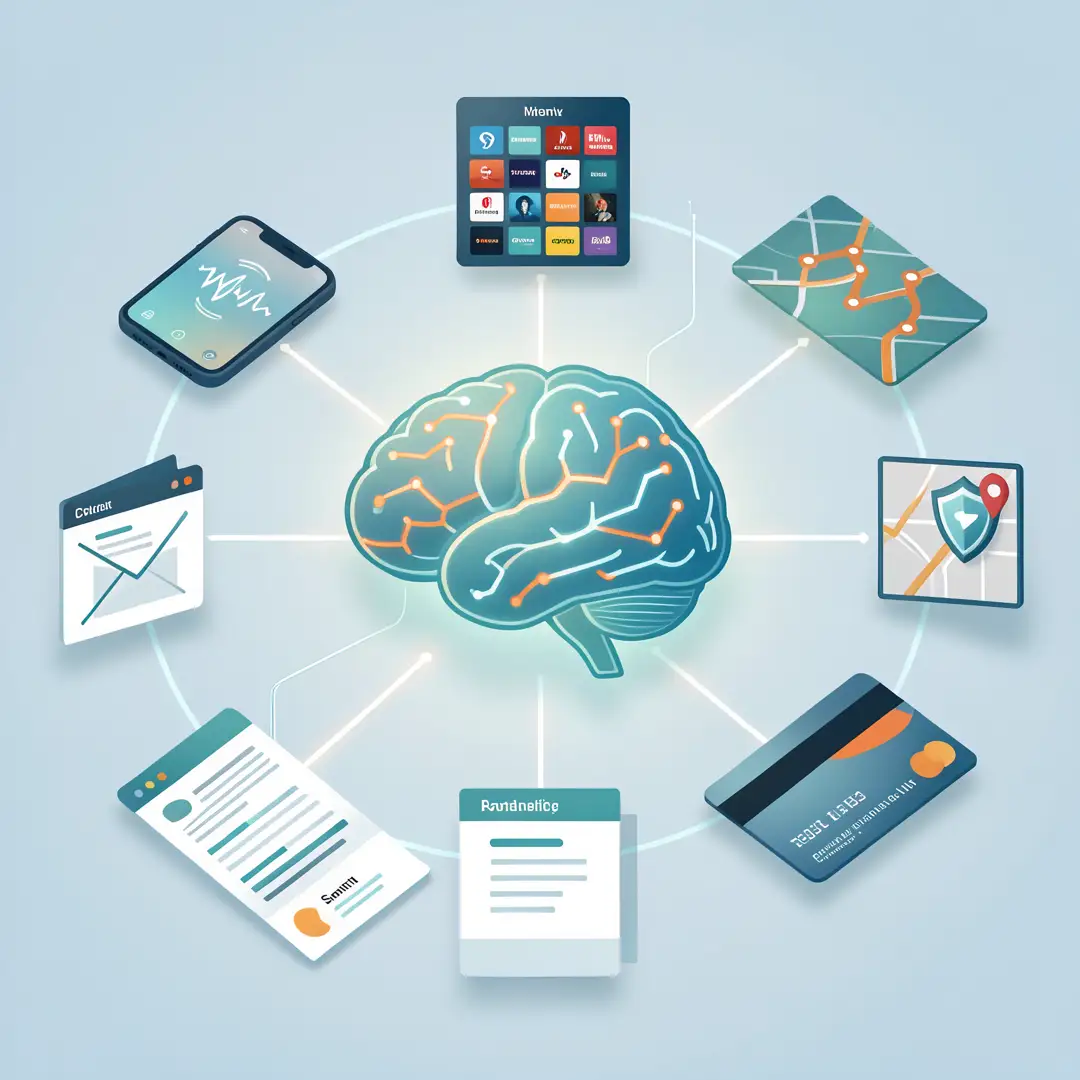
Act on your plan. Correct mislabeled emails, refine your streaming and shopping preferences, enable transaction alerts, confirm your location and schedule in navigation and smart-home apps, and adjust privacy settings to match your comfort level. If you are building something, start with a small, well-labeled dataset and a simple model before scaling up. The principle is the same: give the system good examples and clear feedback.
Step 6: Monitor your progress
Check results after a few weeks. Is your inbox cleaner? Are recommendations better? Did you catch anything unusual in your accounts? Adjust as needed and keep the habits going. Reliable information and consistent habits lead to better long-term outcomes, so treat this as an ongoing routine rather than a one-time task.
FAQ
What should I know about How Machine Learning Is Used in Everyday Life?
You should know that machine learning is already woven into common tools: recommendations, spam filtering, fraud detection, navigation, voice assistants, and fitness tracking. It learns patterns from data rather than following only hand-coded rules. That means its usefulness depends on data quality and its risks include bias, opacity, and privacy concerns. Understanding these basics helps you use the tools more deliberately and question results when something seems off.
Who is this guide for?
You now have a solid foundation for How Machine Learning Is Used in Everyday Life. Apply the best practices above and revisit this guide as your needs evolve.